
Asian Development Bank delegation visits Karachi ports
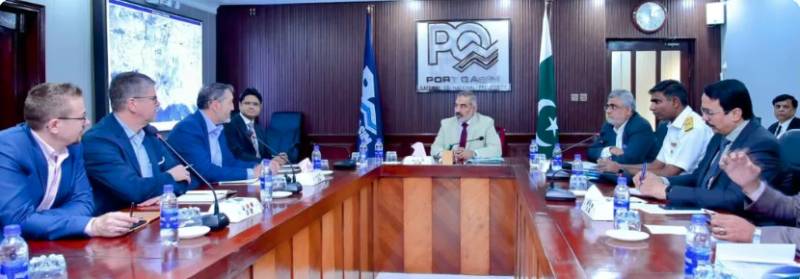
Asian Development Bank and Pakistan Railways jointly visited as a delegation, different ports of Karachi on Friday. The visit aimed to review the feasibility of Port’s connectivity with Pakistan Railway and effective arrangements for freight operations. KPT Chairman Rear Admiral ( R ) Shahid has received the delegation as it arrived at Karachi Port Trust. Operators of South Asia Pakistan Container Terminal, Karachi International Container Terminal Limited, and Karachi Gateway Terminal (Pvt) Limited have given a comprehensive briefing to the delegation. Port Qasim Authority team, during the visit, delivered a comprehensive presentation on the port’s operations and connectivity to the hinterland via road and railway networks. The Chairman of Port Qasim Authority, Rear Admiral (R) Syed Moazzam Ilyas, briefed the Asian Development Bank team on the port’s recent ongoing development projects to support the country’s future economic growth. The Asian Development Bank team was impressed and appreciated the port’s performance and significant potential for contribution to Pakistan’s economic development. Chairman of Karachi Port Trust Rear Admiral ( R ) Shahid referredto the M-1 project as the backbone of the national economy. Later, the delegation visited Qasim International Container Terminal and witnessed a practical demonstration of port operations. Notably, Qasim International Container Terminal is a major container handling facility located at Port Qasim near Karachi, Pakistan, operated by DP World, serving as a vital hub for international trade and logistics in the region.
The delegation also visited and reviewed the mechanical loading system facility at Yusufwala Coal. It was a thorough briefing on the modern loading system and its efficacy.

Conclusively, the delegation visited the Marshalling Yard Pipri, where detailed discussions were held on the projected surge in line capability after the development of ML-1, effective planning of freight operations, and possibilities for further improvements at loading points connected to ports.