
Pakistan unveils Rs18.77 trillion budget with salary relief, higher defence spending and tax reforms
Pakistan unveils Rs18.77 trillion budget with relief to salary class, higher spending on Defence and reformation in taxation. Federal board of revenue has set a target of Rs. 15.26 trillion; Rs 838 billion has been increased in Benazeer Income Support Program. IN budget 2026-2027, Government has announced an increment of 7% into Salaries and pension. Rs3 trillion has been allocated for defense. Super tax has also been abolished for six sectors. PSDP set at Rs1 trillion as government targets 4% economic growth
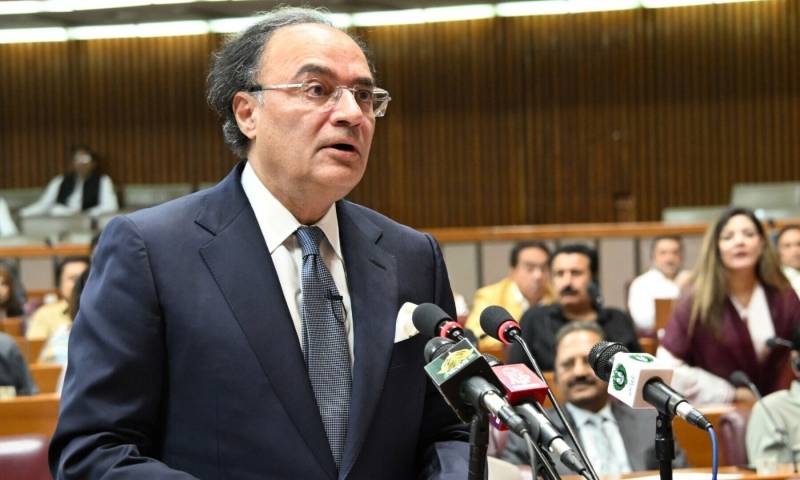
Finance Minister Mr. Aurangzaib has presented third budget and said that Pakistan is now moving from economic instability toward recovery. Now Pakistan will be entering into a phase where focused would be on productivity, exports, industrial growth and employment generation.Pakistan has now acknowledged the Defence strength of Pakistan. The Finance Minister referred the success of Operation Bunyan Marsus and subsequently growing international interest into Pakistan’s Defence industry. He further said that the world looks at Pakistan now for acquiring its Fighter Aircrafts and as a credible mediator in Internation affairs. Pakistan has improved significantly its strategic standing.
Opposition protest
Opposition Members belonging from Pakistan Tehreek-e-Insaf (PTI) have staged a noisy protest in National Assembly against the federal budget, carrying placards and chanting slogans against the budget which they have mentioned as an “anti-people budget.”
During the proceedings of budget, PTI lawmakers started raising slogans and displayed placards with criticism on the government’s fiscal proposals. The opposition members have accused the Government of burdening the people with economic measures which will create the financial hardship for people.
Protesting people have also torned the copies of today’s agenda and threw the pieces toward the treasury benches and towards Prime Minister Shehbaz Sharif and Finance Minister Muhammad Aurangzeb.
The incident created a high tension between opposition and treasury members, set off Assembly security personnel and sergeants-at-arms to intervene and form a barrier between lawmakers from the ruling PML-N and PTI to avoid any physical conflict.
Despite the interruption, House proceedings continued with slogans from opposition benches. PTI members have maintained their protest against the budget, while government lawmakers defended the financial plan presented by the coalition government.
Budget size and economic outlook
The federal budget outlay for FY 2026-27 has been estimated at Rs18.771 trillion, while the net revenue has been projected for Rs11.751 trillion. A record target for tax collection of Rs15.264 trillion has been assigned to Federal Board of Revenue (FBR).
The Government expects economic growth to accelerate to 4 percent during the next fiscal year after recording improvements in key economic indicators.
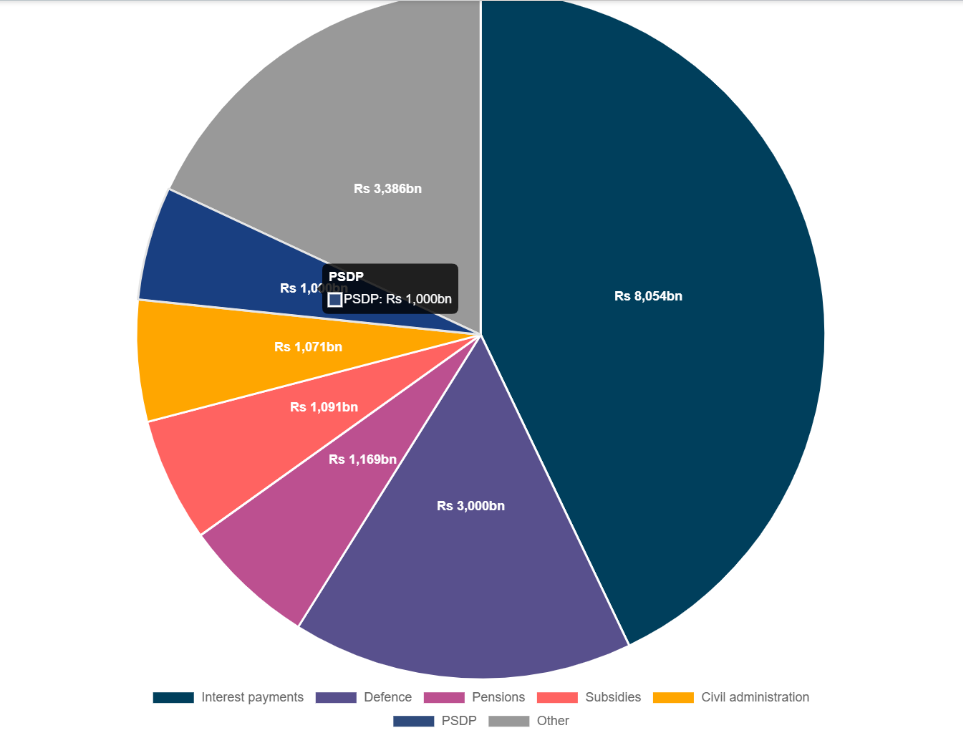
Federal budget expenditure 2026-27
Major spending heads in Rs billion
Finance Minister Mr. Aurangzeb also said that Pakistan’s economy had expanded to $452 billion with per capital income increased from $1,751 to $1,901. He further noted that foreign exchange reserves had increased from about $4 billion three years ago to over $17 billion. These are enough to cover approximately three months of imports.
The minister said remittances were expected to exceed $41 billion during the current fiscal year, while inflation and fiscal pressures had eased considerably. He further added that the financial deficit, which stood at 7.8 percent of GDP in June 2023, was projected to be reduced to about 4 percent by the end of the current fiscal year.
Salary, pension and minimum wage relief
In the announced budget for the period of 2026-2027, the Government has proposed a 7 per cent increase in salaries of federal government employees and a 7 percent rise in pensions for retired colleagues.
The budget also proposes a revision in minimum wages applicable in the current financial year, i.e. an increase by 10 per cent as a relief to low-income workers amid permanent cost-of-living pressures.
Defence spending reaches Rs3 trillion
The government has set a priority on National Defence and reserved the largest spending on it in the budget.
The government has allocated Rs3 trillion for Defence, showing regional security challenges and military modernisation conditions. The allocation represents a meaningful increase over previous years.
Further, Rs 822 billion has been earmarked for military pensions, while total pension expenditures have been estimated at Rs 1.169 trillion, including Rs 272 billion for civil pensions.
Development spending and PSDP
The government allocated Rs 1 trillion for the development program, fall under the federal Public Sector Development Program (PSDP), while overall national development spending is projected at Rs 3.675 trillion.
The budget proposes:
Rs1 trillion for federal development projects
Rs2.224 trillion for provincial development programmes
Rs451 billion for investment in state-owned enterprises (SOEs)
Major development allocations 2026-27
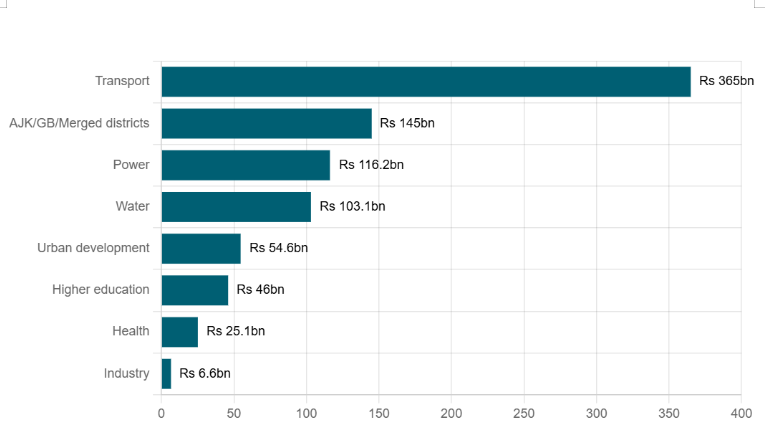
The budget allocates:
Rs 365 billion has been reserved for transport and communication infrastructure
Rs 30 billion has been allocated to the Sukkur-Hyderabad Motorway (M-6)
Rs 25 billion are kept for the ML-1 railway upgrade
More than Rs93 billion has been budgeted for Gwadar and provincial transport projects
Rs100 billion is reserved for the Karachi-Chaman N-25 Expressway corridor
Water and energy sector allocations have also remained the center of attention in the budget
The government has allocated Rs103.1 billion for 43 water-sector projects.
Major allocations include:
Rs 14 billion will be spent on the Diamer-Bhasha Dam
Rs 15 billion has been reserved for Mohmand Dam
Rs 22 billion has been kept for the Dasu Hydropower Project
Rs 10 billion have been taken for Karachi’s K-IV water supply project
The power sector is also a priority of the government in 2026-2027:
Rs116.2 are reserved billion allocated overall
Rs50.2 billion has been budgeted for WAPDA solar and wind projects
Rs 13.1 billion has been taken for eight hydropower projects in Azad Kashmir and Gilgit-Baltistan
Additional investment of Rs158 billion is reserved for WAPDA and power sector entities
Relief for the salaried class
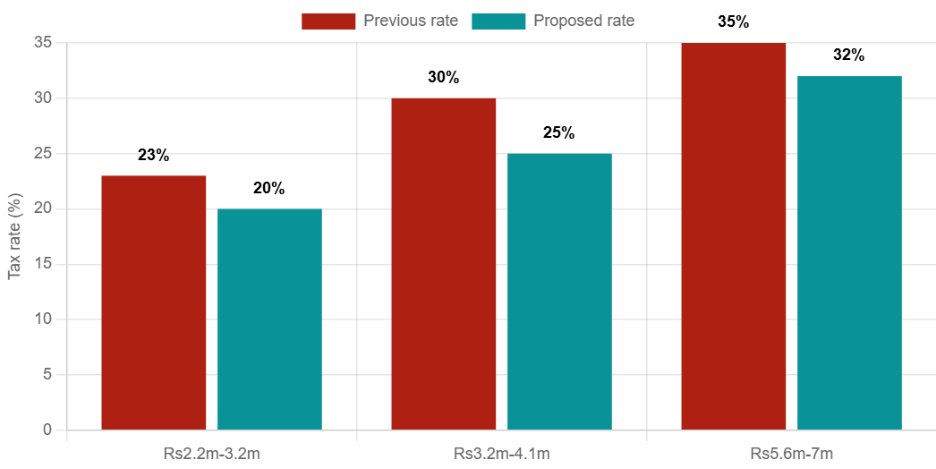
The government has the desire to provide tax relief measures for the salaried class, so it has abolished the 9 per cent surcharge imposed on the salaried class.
The revised tax rates include:
BISP and social protection expanded
The government increased support for vulnerable households by allocating Rs838 billion for the Benazir Income Support Program (BISP), a 17 per cent increase from the previous year. The program is expected to cover approximately 12 million families.
The budget also includes:
Rs146 billion for Azad Jammu and Kashmir
Rs88 billion for Gilgit-Baltistan
Rs95 billion for the merged districts of Khyber Pakhtunkhwa
What becomes cheaper?
The budget proposes: Elimination of taxes on women’s sanitary pads, related health products, and contraceptives
Lower taxes on property transactions, tax burden on salaried individuals
Reduced withholding tax on international online purchases and card transactions
What becomes more expensive?
The government proposed new federal excise duties on:
- Imported SUVs between 2,000cc and 3,000cc
Vehicles above 3,000 cc
Luxury electric vehicles valued above Rs 20 million
Education, health and youth development
The budget allocates:
Government has reserved Rs46 billion for higher education, kept Rs22 billion for Danish Schools, budgeted Rs25.1 billion for health projects, taken Rs7.9 billion for the Prime Minister’s Youth Skills Development Program reserved a fund of Rs3.6 billion for digital learning, artificial intelligence and education networks.
Property sector receives relief
To encourage construction and connected industries, the government has proposed a huge reduction in property-related taxes, accordingly the withholding tax on property purchases for filers would now be 1.25 % instead of 2.5%, and sales tax on property has been from 5.5 percent to 2.75 percent.
Super tax reforms
The government has declared the complete elimination of super tax for six sectors and suggested eliminating super tax on income falling within six slabs between Rs150 million and Rs500 million.
For higher-income categories, the super tax rate is proposed to be reduced from 10 percent to 8 percent. However the levy will continue for banks, oil and gas exploration companies and fertilizer manufacturers.